
There is something about Jaipur that keeps drawing travelers back year after year. Whether it is the soft glow of morning light hitting the pink terracotta walls, the aroma of fresh pyaaz kachoris wafting through the crowded bazaars, or the sheer architectural genius of its forts, the city remains an unmatched jewel in India’s crown.
As we move through 2026, travel trends have shifted. Visitors are looking for deeper experiences—combining the iconic, must-see heritage monuments with slower, more meaningful exploration. If you are planning a trip to the Pink City this year, maximizing your time is essential.
Whether you are arriving for a quick weekend getaway or a comprehensive cultural immersive experience, here are the 8 best places to visit in Jaipur in 2026, along with practical insider tips to help you beat the crowds.
1. Amber Fort (Amer Fort)
Perched high on a hill overlooking Maota Lake, Amber Fort is the definitive starting point for any Jaipur itinerary. Built from yellow and pink sandstone and white marble, this massive fortress blends Hindu and Mughal architectural styles seamlessly.
The absolute highlight here is the Sheesh Mahal (Mirror Palace). The walls and ceilings are inlaid with thousands of imported concave mirrors that illuminate the entire room with just a single matchstick or flashlight beam.
- Insider Tip for 2026: Skip the midday heat and lines by arriving exactly at 8:00 AM. The morning light reflecting off the fort walls is spectacular for photography.
- How to get there: If you are short on time, arranging a Jaipur Sightseeing Tour By Car allows you to navigate the winding roads up to the fort gates smoothly without haggling with local transport.
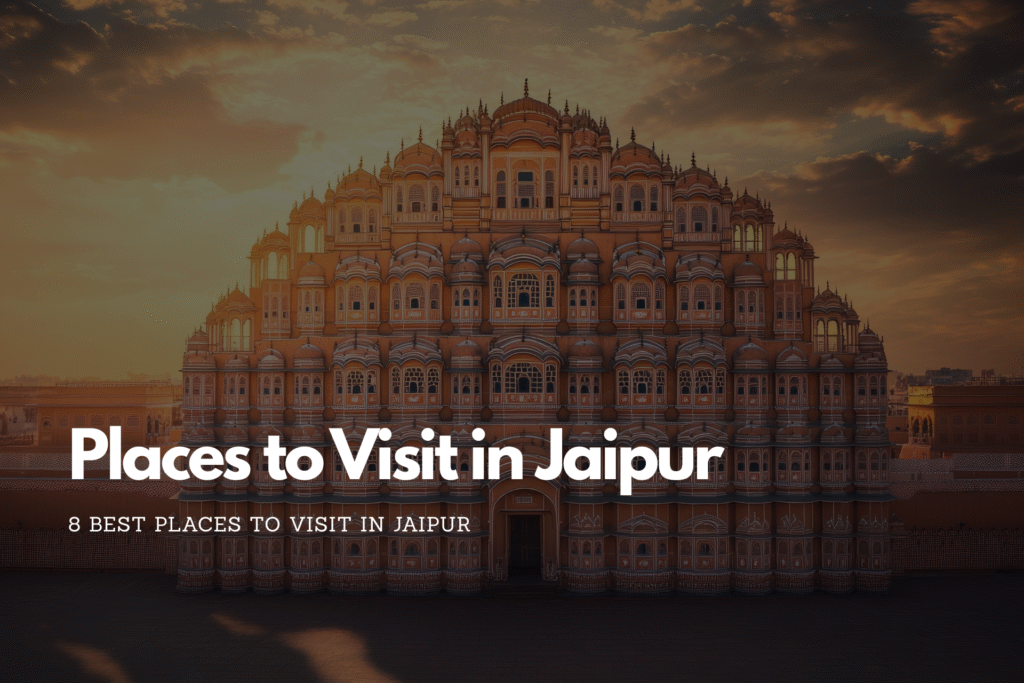
2. Hawa Mahal (Palace of Winds)
Hawa Mahal is perhaps the most globally recognized landmark in Jaipur. Built in 1799 by Maharaja Sawai Pratap Singh, this five-story exterior resembles a honeycomb, featuring 953 small windows called jharokhas. These windows were designed to let royal women observe daily street life without being seen themselves, while simultaneously creating a natural cooling effect through the wind.
- Insider Tip for 2026: While walking inside is historical, the best view of the facade is actually from across the street. Head up to one of the rooftop cafes (like the Tattoo Cafe or Wind View Cafe) early in the morning. Order a hot cup of masala chai and watch the sun light up the pink sandstone facade.
3. City Palace
Located right in the heart of the Old City, the City Palace is a sprawling complex of courtyards, gardens, and buildings. It is a living piece of history—a portion of the palace still serves as the residence for Jaipur’s titular royal family.
Don’t miss the Pritam Niwas Chowk, an inner courtyard featuring four magnificent gates, each dedicated to a different season and a specific Hindu deity. The Peacock Gate, representing autumn, is particularly breathtaking with its vivid mosaic work.
- Insider Tip for 2026: If you want an exclusive, crowd-free experience, you can buy a premium ticket to tour the private royal quarters, including the stunning blue-and-white Chandra Mahal.
4. Jantar Mantar
Right next to the City Palace lies Jantar Mantar, a UNESCO World Heritage site featuring nineteen architectural astronomical instruments. Built by King Sawai Jai Singh II in the early 18th century, it houses the world’s largest stone sundial.
It looks like a collection of massive, futuristic abstract sculptures, but every single structure serves a precise scientific purpose—from predicting eclipses to tracking the location of stars.
- Insider Tip for 2026: Do not try to explore Jantar Mantar without a guide or an audio guide. Without an explanation of how these stone instruments calculate time down to the second, it will just look like an outdoor sculpture park.
5. Nahargarh Fort
If you want to see Jaipur from above, Nahargarh Fort is the place to be. Standing on the edge of the Aravalli Hills, this fort was built as a defensive retreat for the city. Today, it is the premier spot for catching a golden hour sunset over the entire urban sprawl of the Pink City.
- Insider Tip for 2026: The stepwell (baori) inside the fort complex is an architectural marvel in its own right. It’s also famous among movie buffs as the shooting location for iconic Bollywood films. Visit around 4:30 PM to explore the fort before settling down at the edge for the sunset view.
6. Patrika Gate
For a taste of modern Rajasthani artistry, head to Patrika Gate, located at the Jawahar Circle. While it is a relatively newer addition compared to the centuries-old forts, it has quickly become one of the most visited spots in the city. Each archway of the gate is hand-painted with intricate, vibrant murals depicting the history, rulers, jewelry, and daily life of Rajasthan.
- Insider Tip for 2026: This is a public walkway, so it gets incredibly busy with lifestyle photographers and tourists. Arrive around 7:00 AM for soft, even lighting and a completely empty corridor.
7. Jal Mahal (The Water Palace)
Floating silently in the middle of Man Sagar Lake, Jal Mahal looks like something straight out of a postcard. This low-rise symmetrical palace actually has five stories, but four of them remain submerged under water when the lake is full. While the interior is currently closed to the public, the view from the lakeside promenade is completely mesmerizing.
- Insider Tip for 2026: Combine your visit to Jal Mahal with your return journey from Amber Fort, as it sits directly on the route back to the city center. The lake pathway is highly atmospheric during twilight when the palace lights are turned on.
8. Albert Hall Museum
As the oldest museum in the state, the Albert Hall Museum is a stunning example of Indo-Saracenic architecture. Inside, you will find an extensive collection of historic artifacts, including traditional costumes, pottery, wood crafts, sculptures, and even an Egyptian mummy.
- Insider Tip for 2026: While the museum is great during the day, the real magic happens at night. The entire exterior of the building is illuminated by yellow and blue lights, creating a spectacular view as hundreds of pigeons swarm around the domes.
Planning Your Jaipur Itinerary Efficiently
Jaipur is highly accessible, making it one of the top destinations for travelers departing from the national capital region. If you are pressed for time, a tailored Same Day Jaipur Tour From Delhi is an exceptionally popular option. It allows you to skip the hassle of train bookings or navigating public buses, giving you a private, air-conditioned vehicle to explore the city’s highlights comfortably and return by nightfall.
For travelers who prefer flexibility, booking a dedicated Jaipur Tour By Car ensures that you can set your own pace. You can spend an extra hour photographing Patrika Gate or stop for an authentic lunch without being rushed by a rigid group tour schedule.
When mapping out a trip across Rajasthan or looking for reliable ground logistics, partnering with established Tour Operators in India can transform your vacation from a stressful transit experience into a seamless, deeply enriching cultural journey.
Frequently Asked Questions (FAQs)
1. Can I really see the best places in Jaipur in just one day?
Yes, it is entirely possible if you organize your transport properly. A curated Same Day Jaipur Tour typically focuses on the core landmarks: Amber Fort, Hawa Mahal, City Palace, and Jal Mahal. By hiring a private vehicle, you cut out waiting times and can easily fit these iconic locations into a single, action-packed day trip.
2. What is the best month to visit Jaipur in 2026?
The ideal window to visit Jaipur is from October to March. During these winter months, the weather is pleasant, hovering between 15°C and 30°C, making outdoor sightseeing comfortable. April to June can get extremely hot, with temperatures frequently crossing 40°C.
3. Is a guide necessary for the historical monuments in Jaipur?
While you can explore places like Hawa Mahal or Patrika Gate on your own, sites with complex historical and scientific contexts—such as City Palace and Jantar Mantar—are best experienced with a certified local guide or a comprehensive audio guide to truly appreciate the history.
4. What should I buy when shopping in Jaipur’s local markets?
Jaipur is world-famous for its traditional handicrafts. Look out for blue pottery, block-printed textiles (like quilts and bedsheets), silver jewelry, and traditional leather footwear (juttis) in traditional markets like Johari Bazar and Bapu Bazar.